Tao of Trading Articles
Trading Discipline & Methods
Why Trading Isn't Gambling
Trading Discipline & Methods | By Simon Ree | 29 June 2026
Last week I made the case that almost everyone in the market is a trader, they just won’t say it out loud. I left one thread dangling. The reason so many people flinch at the word “trader” in the first place is that, in their heads, it sits a little too close to another word. Gambling.
So let’s settle that one, because it matters more than it looks. Anyone hoping to pull a steady income out of the markets cannot afford to be chasing thrills and praying for good luck. Those two things will quietly bankrupt you. And by the end of this I’ll have handed you the one number that tells you, mathematically, whether you’re trading or gambling. It’s called expectancy, and once you understand it you can never quite see the markets the same way again.
What Gambling Actually Looks Like
A few years back I was sitting in a café in Singapore with a mate who has nothing to do with the investment world. He asked me what I’d been trading lately, which is the question people often ask me. So I gave him the rundown... what I’d made money on, what I’d dropped a bit on.
Then I asked him the same. He told me he’d sworn off trading stocks entirely since 2008, when he lost a bundle. No more “gambling” for him, he said. From here on he was sticking to buying ETFs.
I’ve never quite gelled with that point of view. And here’s the part that always makes me smile.
When my mate buys an ETF or an index fund, he is not a long-term investor in a business whose cashflows he has modelled and whose valuation he understands. He’s buying a financial asset that he expects to sell at a higher price somewhere down the track. Which, as I laid out last week, is the very definition of trading.
So watch what happens. Just about every smart financial commentator on earth is right now urging every investor who’ll listen to pile into ETFs and index funds. Meanwhile, not a single one of them is suggesting you put 40% of your net worth on the blackjack table. Why the difference? Because blackjack is gambling. And ETFs, apparently, are not.
So my mate says trading stocks is gambling, and billionaire hedge fund managers say trading stocks is not gambling. They can’t both be right. To work out who is, we need to talk about three things... motivation, intent, and odds.
Motivation, Intent, and Odds
What is a gambler actually after? What’s the motivation?
A gambler wants an outsized, lottery-style payoff. Something they haven’t worked for. Something they know, deep down, they don’t really deserve and they’ll be lucky to get.
If I put $100 on red at the roulette table, I know I don’t deserve to win. My odds on any single spin are 47.37%. Sure, I might win this once. But play the long game and the maths is merciless... I am more likely than not to lose money.
And right there is the thrill of it. If I put $100 on red and it lands, I’ve done something a bit naughty, something I know I shouldn’t, and I’ve gotten away with it. I’ve beaten odds that were stacked against me and walked away grinning. It’s a bit like surviving a wipeout on a monster wave. It’s a rush. Some people are addicted to that rush.
“Money won is twice as sweet as money earned.” - Fast Eddie Felson, The Color of Money
There’s nothing remotely thrilling about buying an index fund, or any other “safe” parking spot for your money. Over a long enough horizon you know you’ll win, and there’s nothing naughty or exciting about that. A term deposit or a government bond is a yawn-fest. Zero chance you’ll double your money, near-zero chance you’ll lose any, if held to maturity. You’ll make your 4% and that’s the end of the story.
Trading is neither of those things. There are no guarantees waiting for you, and no government underwriting the downside. So does the absence of a safety net make trading gambling?
It depends. And what it depends on is the whole ballgame.
When Buying Shares Really Is Gambling
If I buy a random penny stock, that’s gambling, and I can tell you exactly why.
It comes back to odds and intent. The only reason I’m touching that penny stock is a hope that it hands me a lottery-style return. But the odds of it actually 10x-ing are unknowable. Maybe it will. Probably it won’t. But my intent is mostly to get lucky. When the odds are unknowable and I’m hoping and wishing on a star... that is gambling, plain and simple.
What about a blue-chip name instead? If it’s a random pick, things aren’t all that different. Less likely to go to zero, granted, but the odds are still unknowable and so is the payoff.
Now make it a careful, researched selection. The first question is the only one that counts... what are the odds? Look at the fundamentals and ask yourself, of all the stocks that have shown similar fundamentals to the one I like, how many went on to gain x% inside a year? If you can’t answer that, really you’re still gambling. You’re still just hoping to get lucky, just in a nicer suit.
If you can answer it, now you’re making an informed decision. Some people would call that investing. You know your odds, you know your profit target, you know when to bail if it turns sour, and you know when to ring the cash register if it works. The hoping has been replaced by a plan.
So What About Trading?
The first question a good trader asks before risking a cent is this. What’s the risk on this trade, and is the potential reward worth it?
Once we’ve found a high-probability setup we like, the very first thing we define is our stop loss. That’s our line in the sand. The point where we’re happy enough to be proven wrong, take a small loss, and move on without drama.
“Mike, I learned it from you. You always told me this was the rule. Rule number one... throw away your cards the moment you know they can’t win. Fold the hand.”
Jo to Mike McDermott, Rounders
Then we look at our profit target. Support and resistance, volatility, momentum... they all feed into where the trade is likely to give up its gains. If w’re risking 8% on something that may only climb 4% before slamming into resistance, well, we don’t want to be placing bets like that with any regularity. Ugly reward-to-risk is how accounts bleed out slowly while their owners swear they’re being disciplined.
The other question we need to keep asking is bigger than any single trade. What can we expect this system to do for us over hundreds of trades? We want to know that across the long run, our profits will outrun our losses. And yes, there will be losses. Anyone who tells you otherwise is selling something fishy.
Expectancy, The Number That Settles It
The profitability of any trading method over time comes down to one thing. Expectancy. Here’s the formula:
Expectancy = (Probability of a Win × Average Win) − (Probability of a Loss × Average Loss)
Let me show you why this is the most liberating bit of arithmetic a trader ever learns.
Picture a method that wins only 30% of the time. Most people hear that and recoil... wrong seven times out of ten, who’d want that? Stay with me. Say the average winner makes 10% and the average loser drops just 2%. On a $10,000 account:
(30% × $1,000) − (70% × $200) = $160
Every trade, on average, across a large enough sample, adds $160 to your account. You are wrong more than twice as often as you’re right, and you’re still making money. That right there is the single idea the entire “you need a high win rate” industry doesn’t want beginners to understand.
Notice what just happened. The win rate barely matters on its own. What matters hugely is how much you make when you’re right versus how much you give back when you’re wrong. I’m personally happy to be wrong a good chunk of the time, as long as my winners dwarf my losers. The size of the edge does the heavy lifting, not the frequency of being correct.
This is also why nobody walks into their day job each morning praying that today’s the day they’re told they’ve made $10 million. They turn up knowing the odds of the job producing a certain income are high, and they accumulate that income, week after week, paycheque after paycheque. Successful trading runs on exactly the same logic. The recurring income is the point, not praying for a jackpot.
So, Gambling or Not?
Strip it all back and the line between the two is clean.
If you’re in it for the rush, if you’re wishing and hoping on unknowable odds, if your plan is to get lucky and feel that little hit of having gotten away with something... that’s pure gambling, and the casino always wins in the end. The house has expectancy on its side, and you don’t.
But if you know your setup, you’ve defined your risk before you’re in, you take your small losses without flinching, and you understand the expectancy of what you’re doing across hundreds of trades... then it isn’t gambling at all. You’ve simply put the maths on your side, and you’re allowing favourable math to start working its magic. That’s the whole job.
The mate over coffee will probably never call it trading. To him it’s all gambling, and no amount of explanation will shift him. Let it go. There’s no need to “win the argument”.
The only person who has to know the difference is you. And you’ll know it the day you can answer the question a gambler never even thinks to ask: What’s my expectancy?
Gambling is hoping the odds break your way. Trading is knowing they already have… and letting probability work its magic over the longer term. The whole job is getting yourself from the first sentence to the second.
FAQs
What’s the actual difference between trading and gambling?
Motivation, intent, and odds. A gambler is chasing an unearned, lottery-style payoff on unknowable odds, for the rush. A disciplined trader takes a high-probability setup, defines the risk before entering, and lets favourable expectancy do its work across hundreds of trades. The casino has expectancy on its side. A good trader has it on theirs. Without that maths in your favour, you’re just a gambler in a slightly nicer suit.
Is buying an ETF or an index fund gambling?
By the strict definition of trading (buying at one price expecting to sell at a higher one later), ETF buyers are absolutely trading. But it isn’t gambling, because the odds aren’t unknowable. Long-term equity returns over decades are well-documented and broadly favourable. Boring, yes, but on the buyer’s side. That’s the opposite of a casino, where the house’s edge guarantees the player loses over time.
What is expectancy in trading?
Expectancy is the one number that tells you whether a trading method makes money over the long run. The formula is (Probability of a Win × Average Win) minus (Probability of a Loss × Average Loss). Positive expectancy means you’re trading. Negative expectancy means you’re gambling, no matter how sophisticated the strategy looks on paper.
Can you make money trading with a low win rate?
Yes, and many of the best traders do exactly that. A method that wins 30% of the time can still print money if the average winner is several times larger than the average loser. I’m personally right about 60% of the time in my trading and still highly profitable, because my average winner is roughly 2.7 times my average loser. The size of the edge does the heavy lifting, not how often you’re right.
Why doesn’t a high win rate matter as much as people think?
Because chasing a high win rate forces you into ugly reward-to-risk setups. Tight stops, premature profit-taking, over-trading to keep the percentage up. The win rate rises but the maths underneath quietly turns against you. Most retail traders who lose money long-term are doing exactly this. They’re not stupid. They’re following a curriculum that doesn’t work.
What’s the first question a trader should ask before any trade?
What’s the risk on this trade, and is the potential reward worth it? Define your stop loss before you click buy. Look at where the trade is realistically likely to give up its gains. If you’re risking 8% on something that might only climb 4% before stalling, walk away. Ugly reward-to-risk is how accounts bleed out slowly while their owners insist they’re being disciplined.
How do I know if my trading method has positive expectancy?
Track every trade. Win rate, average win size, average loss size. Run the formula across at least 50 to 100 trades before you draw conclusions. A handful of trades tells you nothing. A few hundred tells you whether you’ve built something with an edge or whether you’ve been getting lucky and haven’t worked it out yet.
Is trading penny stocks always gambling?
Almost always, yes. The odds of a 10x are unknowable, the payoff is being chased on hope rather than process, and the intent is usually lottery-style. That’s gambling in a slightly more respectable suit. The same is true of any “researched” pick where the trader can’t actually quote the odds of the outcome they’re hoping for.
Thanks for reading. If you want to build this kind of skill set inside a structured, proven framework, Tao of Trading is built for it. Get started at https://www.taooftrading.com/
The win rate barely matters on its own. What matters hugely is how much you make when you’re right versus how much you give back when you’re wrong.
Recent Trading Discipline
& Methods Posts
-

29 June 2026
-
-
-
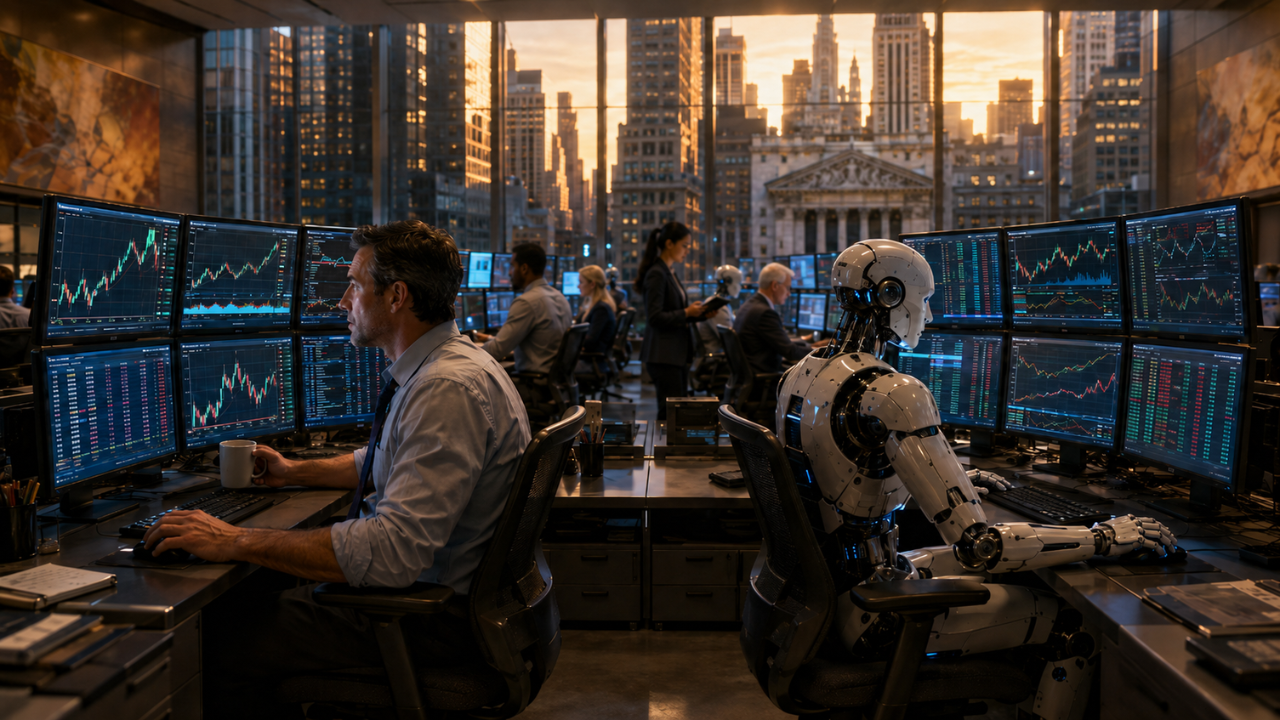
Is AI Replacing Traders? Why Human Trading Skills Are More Valuable Than Ever in 2026
Trading Discipline & Methods | By Simon Ree | 1 June 2026
Most people think AI is finally about to retire the human trader. Three decades in financial markets tells me a different story.
In April 2025, a single policy announcement clipped 11% off the S&P 500 in two sessions. The algorithmic models did exactly what they were trained to do. Same backtested signals. Same level of confidence. Same setups that had worked beautifully in the world that just ceased to exist.
The environment had changed. The models hadn’t noticed.
That isn’t a glitch. It’s a confession. And it’s one the algorithmic trading industry has been making, quietly, for as long as it has existed.
I’ve spent over three decades in financial markets. Goldman Sachs in Australia, where I founded the Markets Desk for Australasia. Citibank in Singapore, working with billionaires and hedge funds. Then full-time as a trader and educator. I’ve watched every wave of technology get sold as the thing that would finally retire human judgment.
Some waves delivered exactly what they promised. Algos absolutely replaced the human market maker. The NYSE floor specialist is essentially extinct. Citadel Securities, Virtu and Jane Street now do that job better than any human ever could. The mechanical, microstructure, raw-speed-based function was automatable, so it got automated. That part of the story is settled.
But notice what got replaced and what didn’t. Liquidity provision, quoting bids and offers, capturing spread, managing inventory in nanoseconds, is a speed game. The machines won it cleanly.
Directional risk-taking under genuine uncertainty, reading regime shifts, sizing into asymmetric setups, deciding when not to trade, is a judgment game. Three decades and several generations of technology later, that one is still distinctly human.
AI is now being sold as the thing that retires the rest. The judgment function. The discretionary trader. The active investor.
It won’t. And if you understand why, 2026 might be one of the better times in a generation to develop genuine trading skills.
What AI Can Actually Do (Credit Where It’s Due)
Dismissing AI outright is foolish.
AI tools can scan thousands of tickers in seconds. They can flag technical patterns the human eye would miss. They process earnings transcripts faster than any analyst, execute orders at microsecond speeds, draft watchlists in the time it takes you to pour a coffee. High-frequency firms have run algorithmic systems for decades, and those systems do exactly what they were built to do.
Retail-facing tools have matured too. In 2026, you can find platforms that generate signals, suggest options strategies, and run scenario analyses that would have been the envy of an institutional desk in 2006. That’s genuine utility. I use and have built tools like that myself.
There’s a meaningful difference between a useful tool and a replacement for judgment. That gap is where this entire question lives.
Bruce Lee said it cleanest. Absorb what is useful, discard what is not, add what is uniquely your own. AI tools sit firmly in the first bucket. They don’t sit in the second.
Steelmanning the AI Bull Case
Before I make the counter-argument, I want to give the AI camp its strongest shot.
It goes something like this. AI processes more data than any human ever could. It strips emotion out of the equation entirely. It backtests with statistical rigour humans can’t match. It executes without hesitation, fatigue or recency bias. As models scale and training data deepens, the edge only grows. Retail traders who refuse to use AI will be left behind, the way buy-and-hold investors who refused to read charts got left behind in the 90s.
It’s coherent. On paper it sounds inevitable. And it happens to be wrong about the part that actually matters.
Where AI Keeps Getting Humbled
Most people think AI signals fail because they’re poorly built. But the good ones fail too. And the reasons have nothing to do with code quality.
Edge Is Not Prediction
Edge in markets is not “I knew it was going up.” Edge is the math underneath your process. How often you win versus how often you lose. How big your typical winner is compared to your typical loser. How disciplined you are about the size of each trade. Get those three numbers pointing the right way, run them across a few hundred trades, and the result is positive over time. That’s the whole game.
A proven probabilistic system makes that math explicit. You know your hit rate. You know your average winner versus your average loser. You know your worst expected drawdown. You know what to do when the bad streak shows up, because you’ve already mathematically planned for it.
Most “AI signals” don’t disclose any of that. You get a directional call. You don’t get the structure underneath. You can’t compound what you can’t measure, and you can’t survive what you haven’t stress-tested.
Here’s a sentence I’d tattoo on every new trader’s forearm if I could. A trader with good risk management will still be profitable even with a random, 50/50 coin-flip entry system.
Read it twice. The entry isn’t the edge. The structure around the entry is.
When the Market Changes, the Model Doesn’t Notice
This is the technical heart of the matter.
AI models are trained on data from the past. They learn the rules of a game that has already been played. The trouble is that markets keep changing the game. A trending market behaves nothing like a range-bound one. A calm market behaves nothing like a panicked one. An inflationary backdrop behaves nothing like a deflationary one. Each one rewards a different style of behaviour.
When the environment shifts, the model doesn’t notice. It keeps firing signals with the same confidence level that worked in the world it was trained on. That’s how algorithmic funds blow up. Not because the models were poorly built. Because they encountered territory their training hadn’t prepared them for.
History is littered with the corpses of “infallible” systems. Long-Term Capital Management in 1998. A whole wave of quant funds in 2007. The flash crash of 2010. The volatility blow-ups of 2018 and 2020. Same story every time. A smart model, run by smart people, walking confidently off a cliff it never saw coming.
A trained human, holding a proven system, can step back and ask a single question. “Does this setup even make sense given what the market is doing right now?” That question has saved more careers than any signal ever generated.
Crowded Trades and Goodhart’s Law
There’s a law worth remembering. When a measure becomes a target, it ceases to be a good measure.
When an AI signal starts working publicly, money piles in. Everyone takes the same trade at the same time. The edge gets squeezed out. By the time you’re seeing it on an Instagram ad, the edge is already gone.
Human judgment on top of a proven framework doesn’t suffer this fate, because the edge isn’t the signal itself. The edge is the discipline gap. The vast majority of retail traders can’t execute the same setup with consistent risk management across two hundred trades. That isn’t a software problem. It’s a behaviour problem.
The people willing to do the boring, repetitive, unglamorous work of executing a proven probabilistic system keep making money long after the latest AI signal vendor has gone dark.
The Behavioural Execution Gap
Thought experiment. Suppose AI handed you a perfect signal tomorrow morning. The market is collapsing. Your phone is going off. Your portfolio is bleeding. The signal says, “buy this symbol”.
Will you click the buy button?
Most people won’t. They’ll freeze, second-guess, override or panic-exit before the trade plays out. The signal can be perfect. The human executing it isn’t.
A trader trained on a probabilistic system has internalised the discipline to act consistently, because they understand the math. They don’t need to “know they’re on winner” to take the trade. They just need to follow the process.
AI can’t install that discipline in you. Only structured repetition can.
The Medallion Paradox
Here’s a fact worth chewing on.
The most successful systematic fund in history is Renaissance Technologies’ Medallion Fund. Roughly 39% net annualised returns over three decades. The team running it is full of mathematicians and physicists applying machine learning to markets, and they have been doing so since the 80s.
It is also closed to outside money.
The Renaissance funds outside investors could actually buy - RIEF, RIDA, RIDGE - have materially underperformed Medallion. In some recent years, they’ve materially underperformed the broader market.
Read that twice.
If pure AI signals were the universal solution, the world’s best AI-driven shop would sell them to you. They don’t. The real edge is human researchers iterating with judgment, deployed at a scale that arbitrages itself out the moment it gets shared more widely.
The retail “AI signals” sold on social media for $197/month have no comparable track record. Most never disclose one. That isn’t a coincidence. It’s the structure of the market.
Risk Management Is a Judgment Call, Not a Formula
Risk management is the most important variable in this entire equation. It’s also the one AI handles worst.
How much of your account goes into a single trade depends on your conviction, your context, the volatility regime, your recent track record, what’s happening with the rest of your portfolio, and how the broader environment is behaving. A skilled trader weighs all of that in real time.
AI systems optimise for the risk parameters they were trained on. When the world breaks the assumptions in the training data, those parameters become dangerous. The same setup that quietly makes you a dollar in calm conditions can cost you five when the market turns hostile. A human notices the shift. The model usually doesn’t.
You are a risk manager, not a trader. Install that one idea and you’re already ahead of 95% of the field.
The Edge AI Can't Touch
The traders who perform consistently share a handful of qualities that are genuinely hard to automate.
Pattern recognition with judgment. Spotting a setup is mechanical. Deciding whether to take it given everything else happening that day is not. That second step is honed after many hours of experience. There’s no shortcut.
Emotional discipline under pressure. AI doesn’t feel fear or greed. It also can’t teach you to manage yours. The traders who last are the ones who’ve built the habits to follow process when every instinct is screaming at them to do exactly the wrong thing.
Adaptability across regimes. The best traders have a toolkit, they’re not locked into a single strategy. They know which tool fits which situation. That kind of flexible, contextual thinking is a distinctly human strength.
And the biggest one? Risk-first thinking.
Protecting capital is the foundation of every lasting career in this game. The question is never just “how much can I make?” It’s always “how much can I lose, and can I live with that?” That orientation, risk before reward, is built through structured education and real market experience. No algorithm instills it.
Who's Actually Thriving in 2026
The traders doing well right now aren’t fighting AI. They’re not blindly trusting it either. They’re using it as a tool while capitalizing on the skills AI can’t replicate.
They use scanners to surface opportunities. They use alerts to stay informed without parking themselves in front of screens all day. But they make the final call. They size the trade. They decide when to exit.
That’s exactly the model my structured options trading is built around. Identify high-probability setups using a clear framework. Manage risk with defined rules. Execute consistently. Market conditions change. The process doesn’t.
That approach works in a bull market, a bear market, and a sideways market, because it’s built on principles, not predictions. Trade setups, not opinions. That’s been my mantra for three decades. Nothing about the AI era has changed it.
Building Skills That Compound
If you’re serious about building trading skills that hold their value regardless of what AI does next, prioritize these four.
Learn options
Options give you flexibility stock-only trading doesn’t. Income in flat markets. Protection in falling ones. Defined-risk exposure in rising ones. The learning curve is shorter than most people assume, once someone strips the unnecessary complexity out of how it’s taught.
Build a risk management system first, not last
Not a vague idea. An actual framework. Position sizing rules. Pre-defined exit rules. A process for handling drawdowns without abandoning your strategy. This isn’t the exciting part. It’s the part that keeps you alive long enough for the exciting part to matter.
Focus on repeatable setups
Consistency comes from knowing a small number of setups deeply, not chasing every signal that crosses your screen. Depth beats breadth.
Commit to structured learning
Self-taught traders plateau because they’re missing foundational pieces that would make everything else click. A structured programme, especially one built around real institutional experience, compresses the curve by years.
At Tao of Trading, the entire curriculum is built around exactly this kind of structured, risk-first approach. I spent three decades inside the institutional world before designing a system for everyday people who want to trade in around 20 minutes a day, without guesswork. Programmes cover options strategies from beginner to advanced. Live coaching and pre-market alerts mean you’re not learning in a vacuum.
FAQs
Will AI eventually replace all retail traders?
Unlikely. AI excels at speed and pattern recognition inside defined parameters. Retail trading success depends on judgment, adaptability, and risk management in an environment that keep changing. Those are human strengths. The traders most at risk aren’t the ones with genuine skill. They’re the ones with no structured process.
Is options trading too complex for someone without a finance background?
No. Options have more moving parts than buying a stock, but the core concepts are learnable with the right instruction. Many of our most successful students come from non-finance backgrounds. The key is starting with a structured foundation rather than piecing things together from scattered YouTube videos.
How much time do I realistically need to trade effectively?
With the right tools and a clear process, many traders complete their full daily routine in around 20 minutes. Reviewing pre-market conditions, identifying setups, placing orders. You don’t need to watch screens all day to trade well. The traders who watch screens all day usually trade worse because of it.
What's the biggest mistake new traders make in the current market?
Skipping risk management. Most beginners focus entirely on finding winning trades and ignore position sizing, stop-loss rules, and how to handle drawdowns. That gap is what ends most trading accounts before they ever have a real chance to grow. I’ve watched it play out the same way for three decades. AI hasn’t changed that pattern one bit.
Does AI make technical analysis obsolete?
No. AI tools use technical analysis as their input. Understanding why certain patterns matter, what they signal about market psychology, and how to interpret them in context is still a human skill. AI can flag a pattern. It can’t tell you whether that pattern makes sense given everything else happening in the market that day. Be careful of what looks obvious.
Can I learn to trade while working a full-time job?
Yes, and many people do. The key is a system designed around your schedule rather than one that demands constant attention. Options strategies focused on swing trades and income generation are particularly well-suited to part-time execution.
Is now a good time to start learning to trade, given market uncertainty?
Every market environment, including uncertain ones, contains opportunities if you have the right framework. Traders who build skills during volatile periods often develop stronger discipline than those who only learn in calm conditions. Starting now, with proper risk management in place, is better than waiting for a "perfect" market that never quite arrives.
Market Rewards Skilled Humans More Than Ever
Most people think AI has made trading harder. What actually happened is AI made it noisier. The two aren’t the same.
Your ability to read context, manage risk, and execute a consistent process is not getting automated away. It compounds. Every setup you learn to recognise, every trade you analyse, every time you follow your rules when it’s uncomfortable, that builds something durable.
I’ve always thought of the market as a river of moving money. We’re not here to dam it, control it, or predict where it’s headed. We’re here to dip our hand in, take a small scoop, and let the river keep flowing.
Not losing money is the game. Survival is the gateway to freedom. That was true before algorithms existed. It’s true now that half the market is run by machines. It will still be true when the next “AI is going to replace everything” wave breaks.
The humans who understand that keep showing up year after year. Everyone else cycles through their account.
If you want to build that kind of skill set inside a structured, proven framework, Tao of Trading is built for it. Get started at https://www.taooftrading.com/
Further Reading
- Fooled by Randomness and The Black Swan, by Nassim Taleb. The definitive case against confident models in non-stationary environments.
- The Man Who Solved the Market, by Gregory Zuckerman. The inside story of Renaissance Technologies and why even the best quant shop closed its doors to outside capital.
-
Trading in the Zone, by Mark Douglas. Why probabilistic thinking, not prediction, is the foundation of consistent trading.
Reminiscences of a Stock Operator, Edwin Lefèvre. Still the most accurate description of market psychology ever written, a century after publication. - The Tao of Trading, by Simon Ree. Built around the structured, risk-first system referenced above.
Suppose AI handed you a perfect signal tomorrow morning. The market is collapsing. Your phone is going off. Your portfolio is bleeding. The signal says, “buy this symbol”. Will you click the buy button?

Risk Management: The Skill Wall Street Lives By and Retail Skips
Trading Discipline & Methods | By Simon Ree | 7 May 2026
I want to tell you about a trader I met in the early days of my career.
He had an extraordinary win rate. Somewhere north of 75%. His entries were always great, his reading of the tape genuinely impressive. And when you talked to him, he came across like a professor of the markets. By most measures, he was exactly what a talented trader looked like. And yet, year after year, he underperformed his peers. His bosses were puzzled. His colleagues were puzzled. Even he was puzzled.
The problem wasn't his entries.
It was his reward-to-risk.
His losses were massive relative to his wins. A 75% win rate sounds incredible until you realise that every losing trade was costing him three times what his winning trades made. The math just didn't work. No matter how gifted his system for entries was, the expectancy of the whole system was negative. He was constantly filling a bucket that had a hole in the bottom.
He eventually “left” the firm he worked for. Last I heard, he was still trading. Still struggling to stay consistently profitable. Still convinced he had to optimise his entries.
I sometimes still think about him when I'm teaching.
The single biggest lie in retail trading education is this: a good entry is all you need to worry about. Pick the right direction, at the right time, with the right setup, and the money follows. The exit, the position size, the rules for when things go wrong... all mere administrative details you work out later.
They are not mere administrative details.
Risk management isn't a module at the end of the course. It isn't the boring bit you sit through before getting to the “real” content. It is THE skill. Everything else, your chart reading, your setups, your scanner, your indicators... that's the vehicle. Risk management is whether you'll survive the journey.
In all of your self-talk, I want you to think of yourself as a risk manager, not a trader. And look, I'm not just playing with words here. The distinction matters more than most people will ever let themselves believe.
What Institutional Traders Know That Retail Traders Don't
At Goldman, we weren't sitting around arguing about whether the market would go up or down. We were debating whether the risk was worth the reward. Would we be compensated adequately if the trade worked? How much would we lose if it didn't? Was there a way to structure the position so that the potential upside was asymmetric to the downside?
Nobody took a position without knowing, before entering, exactly how much they were willing to lose on it.
That last sentence sounds obvious. Apply it honestly to your own trading and see how obvious it actually is.
Most retail traders enter a position without ever defining, in advance, the specific conditions that would prove them wrong. No point of invalidity. No line in the sand. Just an open trade and a vague hope that the market cooperates. That isn't trading. That's outsourcing the most important decision in the entire process to your future self at the worst possible moment.
The institutional approach is the reverse. You define what “wrong” looks like before you place the trade. You know, in advance, the exact conditions under which the market has told you the thesis is invalid. And when those conditions arrive, you exit. Not because you feel like it. Because the plan said to.
This is the pre-trade checklist concept that sits at the heart of everything I teach. Before any position goes on, you already know: what's the setup, what's the maximum you're prepared to lose, at what price or under what conditions does the trade get cut, and what's the reward you're targeting if it works. These aren't questions you answer while the position is moving against you. Because when the position is moving against you, your brain lies to you. That's not a personality flaw. It's neuroscience.
Position Sizing: The 5/2.5 Framework
The “1% rule” gets thrown around a lot in trading circles. Risk no more than 1% of your account on any single trade. Some people say 2%. Some go higher. The numbers vary, but the spirit is the same: cap the bleed on any individual position so that no single trade can break the account.
I teach a slightly different version, specifically calibrated for defined-risk options trades. I call it the 5/2.5 framework.
Maximum position size: 5% of the portfolio.
Maximum risk per trade: 2.5%.
The maths is straightforward. If a defined-risk option position is 5% of your account, and the absolute worst-case stop is a 50% loss on the premium paid (what I call the “OMG stop loss”... the point where things have gone catastrophically against you), then the maximum portfolio damage is 2.5%. That's the floor.
Now here's the key bit. The 2.5% is a backstop, not a target. Proactive risk management means I'm typically exiting these positions well before the 50% mark. If the underlying violates the level I defined as “wrong” before the trade went on, I'm out. Often that's at a 15 - 25% mark on the option premium. The 50% “OMG stop” is what protects me when the market gaps overnight or I get blindsided by something I didn't see coming. It's a safety net, not a plan.
In practice, the realised loss on most losing trades is well under 2.5% of the portfolio. The framework gives me room to be wrong without ruining a year.
Say you have a $50,000 account. Your maximum position size is $2,500. Your absolute worst-case on that position is a $1,250 loss. Your typical loss, with proactive management, is closer to $400 or $500. Now imagine a five-trade losing streak. It happens. Even with an excellent system, a five-trade losing streak isn't unusual over the course of a year. With the 5/2.5 framework and proactive management, you might be down 4 - 6% of the account. Uncomfortable, certainly. But recoverable? Absolutely. You're still in the game.
Now imagine you weren't sizing this way. Each of those five trades was a $5,000 position in a $50,000 account, held all the way to a 50% loss. Same five losers. Now you're down $12,500, a quarter of your account, and the maths of recovery has become punishing. To get back to breakeven from -25%, you need a 33% return. Not from where you started. From where you are now, just to get back to breakeven.
Most accounts that blow up don't do so because the trader had one catastrophic trade. They do so because the trader survived a couple of catastrophic trades... and kept going with the same sizing, on the same emotional autopilot, until the account had nothing left to give.
Defined-risk options are built for this. When I buy a call or a put, the worst-case outcome is the premium I paid. That's it. No margin calls. No scenario where the loss exceeds the investment. Your maximum downside is known, fixed, and paid for before the trade opens. You can size accordingly.
Portfolio Heat: What Nobody Talks About
Most traders think about each position in isolation. This trade is 2.5% risk, that one is 2.5% risk. Seems fine.
But if all five open positions are bullish bets on US tech, correlated to the same macro factors, then in reality you don't have five 2.5% risks. You have one 12.5% risk that's wearing five different hats.
I call this portfolio heat... the aggregate directional exposure of your whole book. Keeping it manageable means thinking not just about each individual trade, but about what all your trades together are betting on. If everything is pointing in the same direction, you're not diversified. You're concentrated, with the illusion of diversification.
The professional approach involves holding positions across different sectors, different instruments, different time horizons, and sometimes different directional biases. A bearish position in one area can offset the heat of several bullish positions elsewhere. None of this is complicated. It just requires thinking one level above the individual trade.
There's also expiration clustering to watch. If five positions all expire in the same week, you don't have five separate risk events. You have one very crowded week. Spreading expirations across time reduces the chance that one bad macro print wipes out several positions simultaneously.
Reward-to-Risk: The Number That Actually Matters
I'm wrong about 40% of the time. I've said this many times, and people always look slightly uneasy when I do. The trading education industry has spent decades teaching people that a high win rate is the goal... 80%, 90% accuracy... and here I am saying I get it wrong a lot more than 10% to 20% of the time.
And yet my returns since 2021 have compounded at over 600%, against the S&P's 83% over the same period.
The reconciliation is simple. My average winning trade is about 2.7 times larger than my average losing trade. The expectancy of the system is positive with a 60% win rate because the wins are significantly bigger than the losses. This is what asymmetry looks like. This is what “managing the reward-to-risk ratio” actually means in practice. Not a theoretical ratio on a spreadsheet, but the real-world ratio of what you actually make when you're right versus what you actually lose when you're wrong.
I generally want a minimum of 2:1 on my setups. Meaning for every $1 I'm prepared to risk, I want at least $2 of potential reward. This gives the system room to absorb the losing trades without killing the edge.
The temptation most traders resist badly is this: when a trade is working, they take profits early. When a trade is losing, they let it run, hoping it comes back. This is exactly backwards. Cut losses quickly. Let winners breathe. It sounds simple enough to print on a coffee mug, and yet it's the discipline that separates the profitable minority from everyone else.
Time Decay and the 30-60 Day Window
Options have a clock built into them, and that clock is not neutral. As expiration approaches, the time value component of an option price decays... slowly at first, then rapidly in the final weeks before expiry. This is theta decay. If you're buying options, it's a constant headwind.
I typically trade options in the 30 - 60 day expiration window. This is where the risk-reward tends to be most attractive for the buyer. You have enough time remaining that the market has room to move in your favour, but not so much time that you're paying a premium for optionality you don't need. Options with very short expirations are cheap for a reason. The window of opportunity is narrow, and theta acceleration in the final days is brutal.
Rolling positions before expiration, closing the current option and opening a new one at a later date, is a useful way of managing positions that are working but haven't yet fully played out. You preserve the directional bet, reset the time clock, and avoid the theta squeeze of the final two weeks.
Weekend risk is worth flagging too. Options don't price in the fact that the market is closed on Saturday and Sunday. If a significant macro event occurs over the weekend, you'll feel it at Monday's open with no ability to exit beforehand. For positions where that risk matters, I prefer to be flat going into the weekend.
FAQs
How much of my trading account should I risk on a single options trade?
Apply the 5/2.5 framework. Your position size is capped at 5% of the account, and the absolute worst-case loss on that position (a 50% drawdown on the option premium, the OMG stop) is 2.5% of the account. Proactive risk management means you're exiting most losers well before that, so the realised loss is typically smaller. On a $50,000 account, that's a maximum position of $2,500 and a worst-case trade loss of $1,250. That might sound conservative. It is. That's the point. Conservative sizing is what keeps you in the game long enough for your edge to compound. Traders who blow up almost never do so on one catastrophic trade. They do so on a hundred careless ones.
Do stop losses work the same way with options as they do with stocks?
No, and this trips up a lot of people who come from a stock trading background. With a defined-risk options position, the absolute stop is built in. Your maximum loss is the premium paid, full stop. That said, I still use price-based and time-based exit rules. If the underlying stock moves past the level that invalidates my thesis, I exit, regardless of what the option is doing. The pre-trade checklist tells me exactly what that level is before I open the position. Exit rules aren't improvised under pressure. They're decided in advance, with a clear head.
Can I trade options profitably with a small account?
Yes, and in some ways a smaller account forces the discipline that larger accounts allow people to skip. Defined-risk options let you participate with a known, capped downside regardless of account size. I'd focus on position sizing first: if your account is $10,000 and you're risking 2% per trade, that's $200 per position. Work within that. The compounding happens later. The survival has to happen now.
Is options trading riskier than buying and holding stocks?
Buying and holding sounds safe because the losses are passive and slow. Options sound risky because the losses can be fast. But a defined-risk options strategy, properly sized, often carries less real downside in a bad year than a fully-invested stock portfolio. In 2022, the S&P 500 fell 19.4%. My defined-risk options system was up 29.5% that year. The thing that felt dangerous outperformed the thing that felt safe by nearly 50 percentage points. Risk is not the same thing as volatility, despite what the finance industry wants you to believe.
How do I know when market conditions are wrong for my usual setups?
Your system should tell you. If you're following a rules-based approach, there will be filters: volatility conditions, trend conditions, sector conditions - that determine whether a given setup has edge right now or doesn't. When the filters aren't met, you don't trade. You sit on your hands. Most retail traders find this incredibly difficult, which is exactly why most retail traders underperform. Activity feels productive. Discipline feels passive. The profitable minority has made peace with the difference.
What is "portfolio heat" and why does it matter?
Portfolio heat is the total directional exposure of your open positions combined. Five separate trades, each risking 2.5%, looks fine in isolation. But if all five are bullish bets on the same sector, correlated to the same macro driver, then in practice you have a single 12.5% directional bet wearing five different hats. A bad macro print doesn't hit one position. It hits all five simultaneously. Managing portfolio heat means thinking about your whole book, not just each trade individually. Spread your exposure across sectors, time horizons, and where possible, directions.
My trade is moving against me. Should I average down?
No. Exit the trade at the pre-defined level and take the loss cleanly. Averaging down is how small losses become large ones. The justification always sounds reasonable in the moment: "the thesis is still intact," "I'll just add a little here", but what you're really doing is overriding a rule you set for yourself before your emotions were involved. The rule exists precisely because your emotions will argue against it when it counts. Let the rule win.
The Market Doesn't Care What You Think
One more thing, and this is important.
Market conditions change. What works in a trending bull market requires adjustment in a sideways chop or a sharp bear move. The core principles of risk management don't change... sizing, pre-defined exits, reward-to-risk, portfolio heat... but the specific setups that offer the best expected value do shift depending on what the market is doing.
Volatile markets, paradoxically, are where defined-risk options strategies can perform best. Big directional moves create the conditions options were designed for. You pay a known premium up front. If the underlying moves substantially in your favour, the payoff is asymmetric to the cost. In quiet markets, you pay less for optionality... but the moves required to make that optionality pay off have less chance of materialising. In 2022, the worst year for equities in a decade, when the S&P dropped nearly 20%, I was up 29.5%. The system was built for exactly that environment.
This is what people miss when they say “it's not a good time to trade right now” or “I'll wait until markets settle down.” The market is always doing something. It's trending up, it's trending down, it's going sideways. For a system built on defined-risk options, all three conditions offer opportunity. You just need to know which setups are appropriate for which environment.
That knowledge doesn't come from watching the news. It comes from following a system. Trade setups, not opinions.
If you take one thing from this article, let it be this: survival is the gateway to freedom.
The traders who win over the long run aren't necessarily the smartest, the fastest, or the ones with the most accurate market read. They're the ones who are still in the game. Who haven't blown the account. Who've survived the inevitable losing streaks with enough capital left to let their edge compound over time.
Not losing money is the game.
Everything else follows from there.
If you want to learn risk-first trading for long-term gain, get started at https://www.taooftrading.com/
The temptation most traders resist badly is this: when a trade is working, they take profits early. When a trade is losing, they let it run, hoping it comes back. This is exactly backwards. Cut losses quickly. Let winners breathe. It sounds simple enough to print on a coffee mug, and yet it's the discipline that separates the profitable minority from everyone else.

Trading Discipline & Methods | By Simon Ree | 25 March 2026
The Myth of the All-Day Trader
I live in Singapore.
So, when the US stock market opens, it is 9:30pm here. I put on my trades shortly after the open, check my stops, and go to bed.
Then I wake up the next morning and check my results over coffee. This isn’t some “laptop lifestyle” marketing line. It’s literally what I do each day.
And yet, most people I talk to believe that trading stocks requires sitting glued to multiple monitors all day, watching every tick…while slowly losing their hair, their mind, and their trading account.
That belief is wrong. But that mental image has kept a lot of capable people out of the market for no good reason.
I spent years at Goldman Sachs and Citibank. I know what professional trading looks like. I also know that the version sold to retail traders, the one that requires your full attention from pre-market to close, is not the only - or best - way to do this.
There’s a simpler approach. It takes about 20 minutes a day. And it works whether you are in New York, London, or Singapore.
Why 20 Minutes Is Actually Enough
Here is the truth: most of the trading day is noise.
The first 30 minutes after the open are emotional and chaotic. The middle of the day is a grind. The last hour can spike in either direction. Trying to trade all of that is not skill, it’s endurance. And endurance is not an edge.
The real edge comes from good preparation, not endless participation. There are no participation trophies in trading!
If you know what you’re looking for before the market opens, you don’t need to obsessively watch the open. You’ve planned all your moves in advance, so trading becomes as simple and stress-free as executing a plan that you’ve already made, like following a recipe. The 20 minutes is the preparation window.
My Actual Routine (Step by Step)
I do this most days. Not every day, because some days there are no setups worth trading. (Cash is a viable position!)
Here is exactly what my routine looks like.
Step 1: Run the Scanner
There are ~10,000 stocks and ETFs listed on US exchanges.
I am not looking at 10,000 symbols. Nobody should be looking at 10,000 symbols. That is how you end up paralysed, confused, and making random decisions.
I run custom scanners that filters the entire market down to a manageable shortlist of stocks. These are stocks showing specific technical characteristics that I care about: things like price action patterns, trend behaviour and momentum.
The scanner does the heavy lifting. I just review what it surfaces.
This step takes less time than it takes me to drink my coffee.
Step 2: Filter for High-Probability Setups
Out of the shortlist, I am looking for symbols where the setup is clean.
Clean means the structure is clear, the risk is defined, and the chart is telling a coherent story. If I have to squint at it or try and talk myself into the trade, I leave it alone.
Most days I’ll find between one and three genuinely interesting setups. Some days I’ll find none.
I never try to “force” a trade. That is the Tao part of this, if you want to get philosophical. You go with what the market is offering, not what you wish it was offering.
This step takes around five minutes
.
Step 3: Plan My Orders Before the Open and Execute
For each setup I like, I plan a limit order at my entry price. If I’m getting a good, tight entry, I will have a “buy up to price” that I’ll never exceed.
I never chase stocks at the open. I decide in advance where I want to get in, and if the market comes to me, great. If it does not, I miss the trade. That is fine…there’ll ALWAYS be another great setup in another day or two!
One of the worst trading mistakes you can make is get excited at the open and “FOMO chase” your way a bad entry.
This step takes another five minutes.
Step 4: Define My Risk Before I Sleep
Every single trade has a “point of invalidity” (POI). This is the line in the sand where price action and indicators are telling you that you are wrong. When price crosses the POI, I get out of the trade - usually for a small loss - no questions asked.
No wishing. No hoping. No “I just know it’s gonna turn around!”. I cut the position.
I know exactly how much I am willing to lose on each trade before I place it. That number is set in advance. It does not change because the stock drops and I "feel like it will come back."
Position sizing comes from that number. If my POI is further away, I trade smaller. The dollar risk always stays consistent.
This takes about three to five minutes and it’s the most important part of the routine.
Step 5: Go to Bed
Seriously. That’s my final step.
The orders are in. The stops are set. There is nothing left to do. Watching the market obsessively after I’ve placed my orders will not change what the market is going to do. It will not improve my results. It will just cost me sleep.
I check my positions the next morning. I adjust anything that needs adjusting. Then I get on with my day.
The whole routine is 20 minutes. Sometimes less.
What Makes a Setup "High-Probability"
A high probability setup is a set of conditions that stack the odds in your favour.
To me, a high-probability setup has three components.
First, the stock is at a meaningful technical level. Not some random price, but a level where buyers or sellers have historically shown up. For example, a well-defined support or resistance level, or, a prior breakout point.
Second, the existence of trend and momentum. Trend is the general direction of price…is it going up, down, or sideways? My Rainbow Logic makes trend identification simple, visual and intuitive. Momentum increases the likelihood that the trend will continue. I use a combination of few simple indicators to help define these factors.
Third, the reward-to-risk ratio is at least 2:1. I am risking one dollar to make two, or more. Over enough trades, that math works in your favour even if you are right less than half the time.
If all three are evident, I am interested in the setup. If one is missing, I’ll pass.
The Tools That Make This Possible
The 20-minute routine only works if you have the right tools.
The scanner is the most important one. Without it, you are manually sifting through thousands of charts, which is not a 20-minute job. It is a four-hour job.
Online checklists that I use to refine the shortlist produced by the scanner make step 2 a breeze.
Custom indicators help too. I use specific overlays that highlight the levels I care about without cluttering the chart with irrelevant information.
None of this is complicated. But it does require the right framework.
Common Mistakes Busy Traders Make
I see the same mistakes repeatedly, especially from people who are trying to trade while working full time.
- Checking positions constantly during the day. This is the fastest way to make bad decisions. You see a red position, panic, and exit before your stop is hit. Then the stock recovers. You missed out on the trade you planned.
- Trading too many positions at once. More positions does not mean more profit. Often, it just means more complexity and more emotional ups and downs. Two or three clean trades beat ten mediocre ones.
- Skipping the pre-market routine. Some people try to trade reactively, watching the market open and jumping in based on what they see, or what their gut tells them, or what they read on social media. That is not part-time trading. That is gambling with extra steps.
- Not defining risk before entering. If you do not know your stop before you buy, you are not trading. You are hoping. (Yes, really.)
- Forcing trades on slow days. Some days the market is not offering anything worth taking. The correct response is to do nothing. Some people find this psychologically difficult. Better to think of it as having a brief break!
How Tao of Trading Fits Into This
Everything I have described above is teachable.
The scanner, the setup criteria, the position sizing, the pre-market routine. None of it requires a finance degree or a Bloomberg terminal.
At Tao of Trading, I built a platform specifically for people who want to trade without making it a second full-time job. The programs are on-demand, so you work through them at your own pace. We host live coaching sessions, and the pre-market alerts I mentioned.
The goal is simple: give you a repeatable process that fits around your actual life.
If you want to see how it works before committing to anything, I run a live workshops where I walk through the core concepts in real time. No pressure, no pitch. Just the framework you need.
You can find details at: https://www.taooftrading.com/event
FAQs
Can I really trade stocks in just 20 minutes a day?
Yes, if your preparation is done in advance. The 20-minute window covers scanning the market, identifying setups, planning limit orders, and defining the point of invalidity. Then all you do is place the orders after the market opens.
Is part-time trading suitable for beginners?
It’s ideal for beginners, provided you learn a structured framework first. The biggest risk for beginners is not the time commitment, it is trading without a defined process. A short daily routine built around high-probability setups is actually more beginner-friendly than reactive, all-day trading.
What is the best time of day to prepare trades if you work full time?
It depends on where you live and your lifestyle. For example, if you live in the US and work a 9-5 job, the evening before the market opens is ideal. US market hours run from 9:30am to 4:00pm Eastern Time. If you do your analysis the evening before, you can place limit orders around 10am Eastern the next day. You can do this from your desktop, laptop or phone.
How many stocks should a part-time trader trade at once?
I recommend capping your portfolio at 10 open positions simultaneously. I will often have fewer open positions than this at any one time.
What is a high-probability trading setup?
A high-probability setup is one where the entry point is at a meaningful technical level, the broader structure supports the trade direction, and the potential reward is at least twice the defined risk. All three conditions together improve the probabilities of a profitable outcome over a series of trades.
Do I need expensive software to trade stocks in 20 minutes a day?
No. The key tools are a reliable scanner that filters stocks based on your criteria, and decent charting software. Many brokers offer basic scanning functionality. More advanced custom indicators and pre-built scanners, like those available through Tao of Trading, save significant time and reduce the margin for error.
One Last Thing
The traders who struggle most are usually the ones trying to do too much, without a plan.
They watch too many stocks, trade too often, and spend too much time in front of the market. They confuse activity with progress.
The traders who do well are selective, patient, and consistent. They have a process. They follow it. And they do not deviate from it because of a hot tip or a bad day.
20 minutes of focused preparation beats eight hours of unfocused screen time. I have seen it repeatedly, and I have lived it myself from Singapore at 9:30pm.
If you want to build that kind of process for yourself, get started at https://www.taooftrading.com/
The real edge comes from good preparation, not endless participation. There are no participation trophies in trading

© 2026 Copyright Tao Of Trading Ltd. All Rights Reserved
The information contained on this website is solely for educational purposes, and does not constitute investment advice. The risk of trading in securities markets can be substantial. You must review and agree to our Disclaimer and Terms of Service before using this site.
Investment and trading of any financial instrument (including stocks and options) has large potential rewards, but also large potential risk. You must be aware of the risks and be willing to accept them in order to invest in the financial markets. Don't trade with money you can't afford to lose. This website is neither a solicitation nor an offer to Buy/Sell any financial instruments. No representation is being made that any account will or is likely to achieve profits or losses similar to those discussed on this website. The past performance of any trading system or methodology is not necessarily indicative of future results.
Individual results may vary, and testimonials are not claimed to represent typical results. All testimonials are by real people, and may not reflect the typical purchaser’s experience, and are not intended to represent or guarantee that anyone will achieve the same or similar results.
Tao Of Trading and its representatives will never manage or offer to manage a customer or individual’s binary options, options, stocks, cryptocurrencies, currencies, futures, forex or any financial instruments or securities/brokerage account. If someone claiming to represent or be associated with Tao Of Trading Ltd solicits you for money or offers to manage your trading account, do not provide any personal information and contact us immediately.